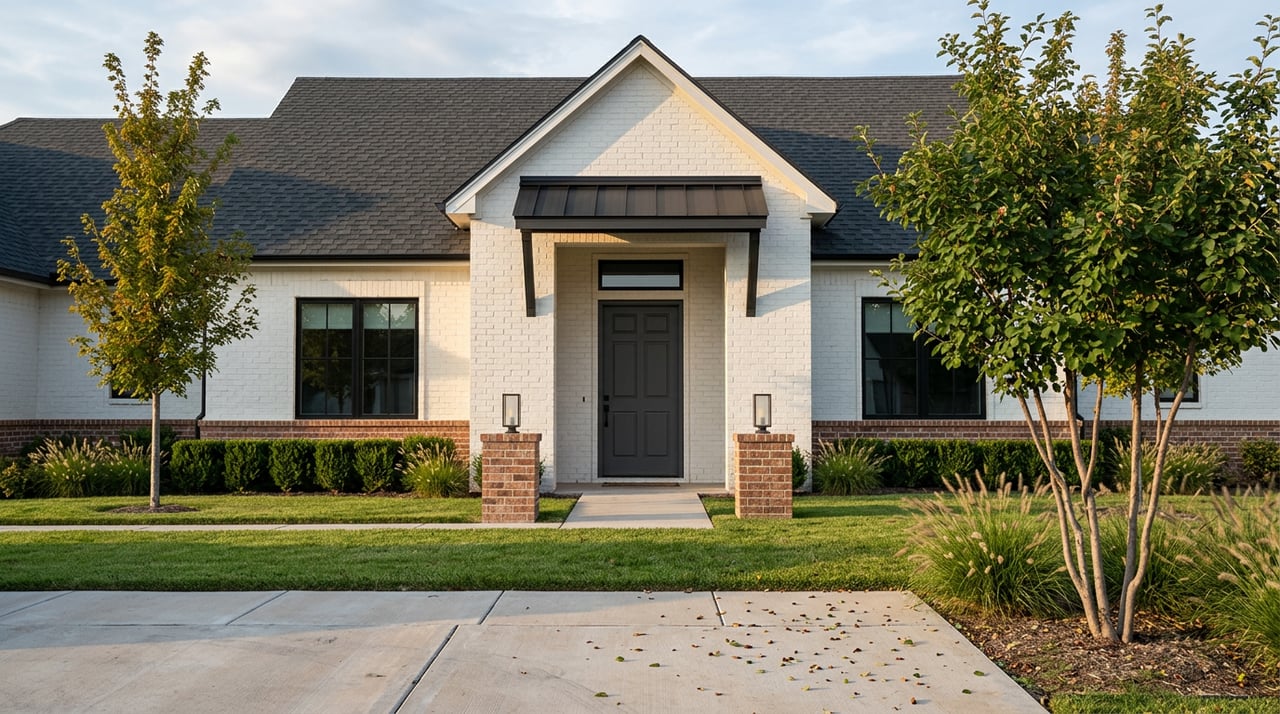
Walk two open houses in the same afternoon and you'll feel it before you can explain it. One sits on a quiet cul-de-sac in Lakeridge, mature trees, a bigger lot, a driveway that's seen thirty winters. The other sits three miles north in Prairie Trail, a short walk from a coffee shop and a town square, sidewalks running past a pocket park that didn't exist twenty years ago. Similar square footage. Similar bedroom count. A meaningfully different price tag.
Most buyers chalk that gap up to age and finishes. Newer house, newer price. That explanation isn't wrong, but it's incomplete, and the missing piece matters if you're trying to figure out what you're actually paying for when you buy into one Ankeny neighborhood over another.
The Gap Shows Up on the Map, Not Just the Listing Sheet
As of September 2026, Ankeny's citywide median for single-family homes sits at $345,000. That number flattens out a real split. A March 2026 breakdown of Redfin sale data by area of town put Northwest Ankeny, the part of the city that includes Prairie Trail, in the $346,000 to $379,000 range, with homes there also moving faster than the rest of the market. Southwest Ankeny, home to older established subdivisions, sat closer to $315,000 over the same window.
That's a real gap, and it tracks with what agents on the ground have been saying about the two ZIP codes that split the city, 50021 and 50023, which land in different pricing bands even though they're minutes apart. The easy read is "new construction costs more." The harder question is why the newness itself commands that much of a premium, and what buyers are locking in when they pay it.
Where the Amenities Actually Came From
As Business Record reported, Prairie Trail isn't a builder's subdivision that happened to add sidewalks. It's a 1,100-acre planned community, platted across 1,031 acres, built from the ground up on New Urbanism principles: walkability, mixed uses, a town square anchoring commercial space around residential blocks. The District at Prairie Trail, the 60-acre commercial core, now draws nearly 600,000 visitors a year and houses 75 businesses. More than 4,200 people live in Prairie Trail today, spread across a footprint that dedicates roughly 200 of its 1,031 acres, about a fifth of the whole community, to parks and open space, connected by 13 miles of internal trails.
None of that infrastructure built itself, and it didn't get funded the way a typical subdivision's streets and sewer lines do. Iowa's Annual Urban Renewal Report filings show the City of Ankeny using tax increment financing, TIF, to pay for specific pieces of Prairie Trail's public realm over more than a decade. SW Prairie Trail Parkway and SW Vintage Parkway were built using general obligation bond proceeds issued in 2015, with additional TIF expenditure tied to those same bonds continuing into later fiscal years. Promenade Park Development drew on a separate 2016 bond series. Improvements to The District at Prairie Trail show up as a TIF expenditure line as recently as a 2024 bond series.
"It shows that critical mass of options where it becomes an evening out," Derek Lord, Ankeny's economic development director, told Business Record about what The District has become for the region.
That critical mass, the coffee shops, the restaurants, the events that pull people in from outside Ankeny entirely, didn't emerge from private capital alone. It was built with public financing.
What Happens After the Bonds Are Paid Off
The timing of bond repayment is a financing detail to consider alongside a listing sheet or portal price history chart.
Nobody buying in Prairie Trail today needs to treat that as an imminent event. The TIF expenditures tied to the district's newest bond series run through 2024, and Iowa's urban renewal law allows these arrangements to extend for years past a project's completion depending on how the debt is structured. But it's a structural fact worth understanding. The parks and parkways that make Prairie Trail's price premium feel justified today were financed with debt.
Compare that to a subdivision like Lakeridge, an established part of Ankeny with bigger lots. Its infrastructure was paid for and finished decades ago. The tradeoff is that Lakeridge never got the walkable town square or the trail network that Prairie Trail's financing built. Hawks, a commuter-friendly pocket closer to I-35, sits somewhere in between: established enough to have settled resale patterns, without the New Urbanism amenity package that drives Prairie Trail's premium.
| Prairie Trail | Lakeridge | Hawks | |
|---|---|---|---|
| Era | Built out since 2007 | Established, older stock | Established, commuter-focused |
| Amenity funding | TIF-financed parks, parkways, town square | Paid off decades ago | Standard infrastructure |
| Price posture | Commands a premium, faster-moving | More affordable, bigger lots | Mid-range, valued for I-35 access |
| What you're buying | Walkability and amenities supported by public financing | Settled infrastructure | Commute convenience over amenity density |
What This Means If You're Comparing Neighborhoods
None of this means Prairie Trail is overpriced or that buyers there are getting a raw deal. The amenities are real, the walkability is real, and the community DRA Properties and the city have built together has become a genuine draw for the region, not just for Ankeny. What it means is that the price-per-square-foot gap between Prairie Trail and a neighborhood like Lakeridge isn't purely a construction-quality story. The price also reflects amenities supported by public financing.
If you're weighing a move-up purchase between an established Ankeny neighborhood and something in Prairie Trail, it's worth asking your lender or title company whether the parcel sits inside an active urban renewal area, and what that has meant historically for the property's assessed value trajectory. It can help you compare the financing history alongside the number on the sign.
Frequently Asked Questions
Is Prairie Trail's premium a fair comparison to make against older Ankeny neighborhoods? It's a fair comparison as long as you're clear on what's driving it. Part of the gap reflects newer construction and finishes, and part of it reflects amenities supported by public financing, while established neighborhoods developed on a different, older timeline.
If you're trying to figure out what a specific address in Ankeny is actually worth to you, not just what the portal says it's worth, that's the kind of question worth bringing to someone who's looked at the parcel history and not just the listing photos. Crispin Parker works Ankeny and the surrounding Central Iowa communities every week and can walk you through what a given neighborhood's financing history means for your specific purchase. Schedule a consultation before you write an offer, not after.
This article is general information, not legal, tax or financial advice. Consult a qualified professional about your situation.